Missing teeth make it harder to chew, change the way your smile looks and, over time, let the jawbone shrink where the roots used to be. A dental implant replaces the root of the tooth, so the new tooth on top is anchored in the bone instead of resting on your gums.
At Dental Care Tijuana we place implants for a single missing tooth, for several teeth in a row and for complete arches. Our clinic is in Zona Río, about 10 minutes by car from the San Ysidro border, and we have been treating patients from Tijuana, San Diego and the rest of California since 1999.
How a dental implant works
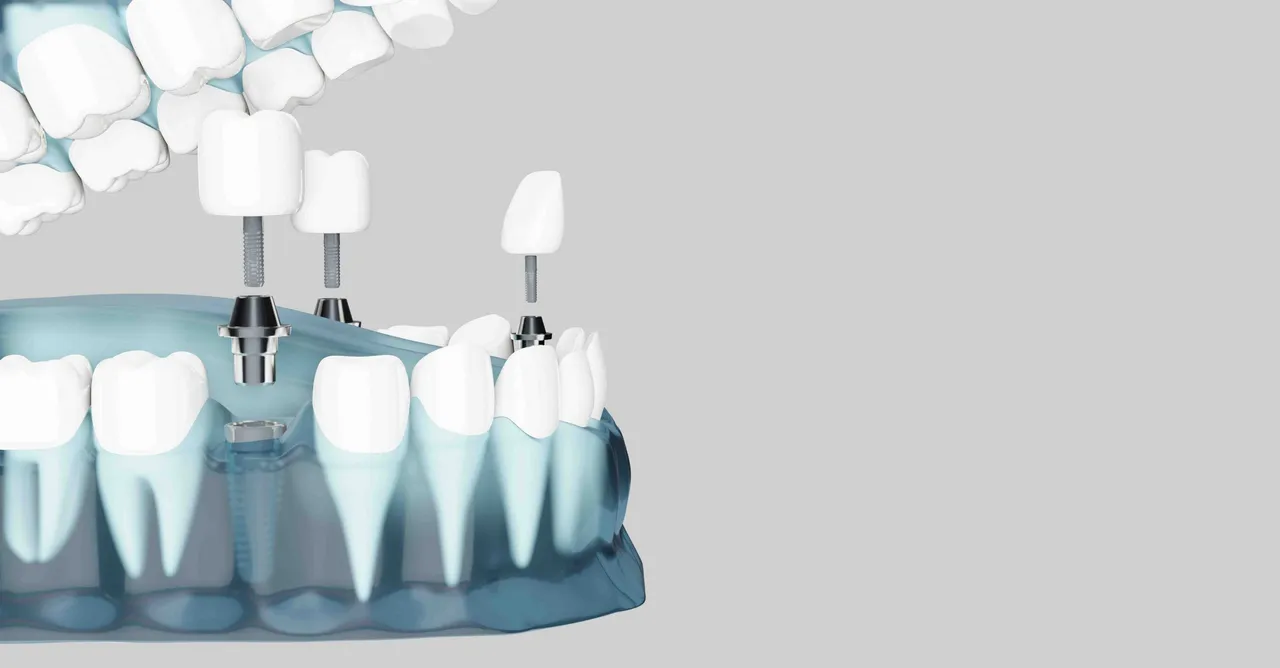
An implant has three parts:
- The implant, a small post, usually made of titanium, that is placed in the jawbone and fuses with it over a few months.
- The abutment, a connector that attaches to the implant and holds the new tooth.
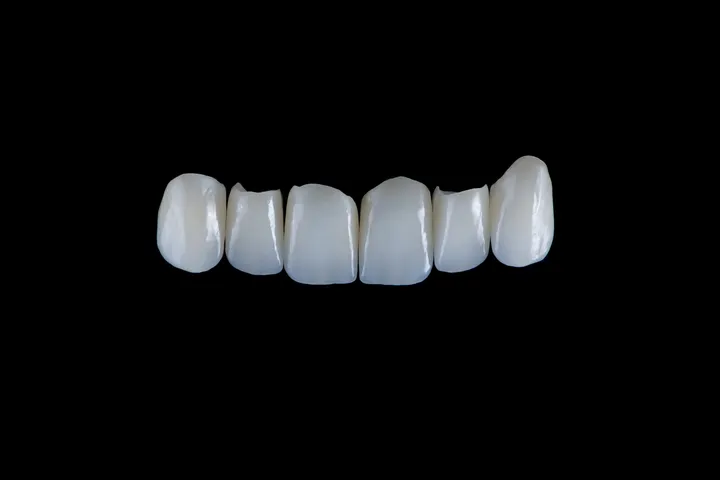
- The restoration, which can be a single crown, a bridge that replaces several teeth or a full-arch prosthesis.
Because the implant is anchored in the bone, it does not depend on the neighboring teeth for support, and it helps preserve the bone around it.
Options for one, several or all of your teeth
- Single implant and crown for one missing tooth.
- Implant-supported bridge when several teeth in a row are missing. Two or more implants can hold a bridge with more teeth.
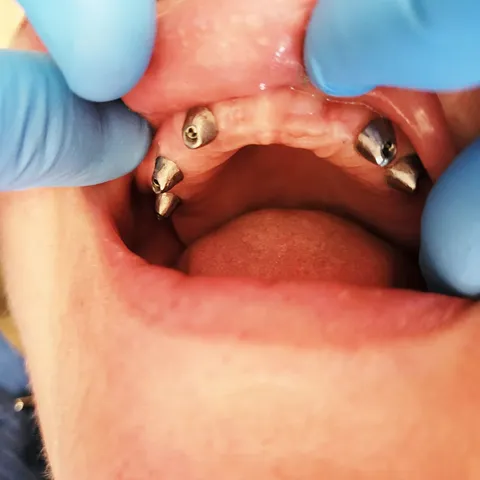
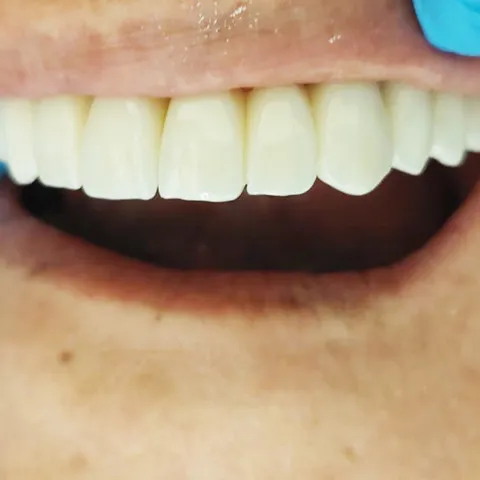
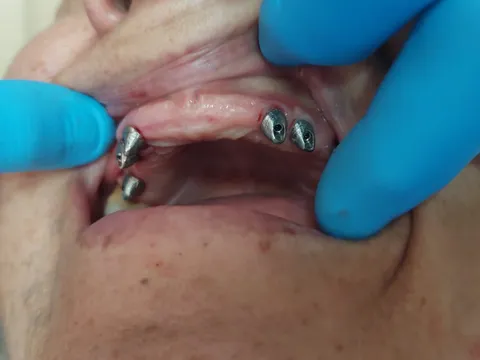
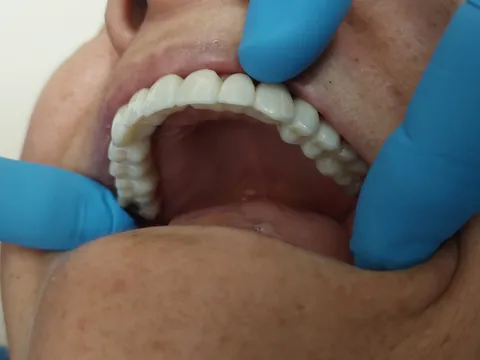
- Full arch on implants when all the teeth in the upper or lower jaw are missing or need to be removed. Depending on your case, it can be a fixed bridge that only the dentist removes, or a denture that snaps onto the implants and that you take out to clean.
You can see full-arch cases treated at our clinic in our before and after gallery.
Are you a good candidate?
Most adults who are missing teeth can consider implants. The main requirements are enough bone to hold the implant, healthy gums and good general health. Smoking, uncontrolled diabetes and some medications can affect healing, so tell us about your medical history at your consultation.
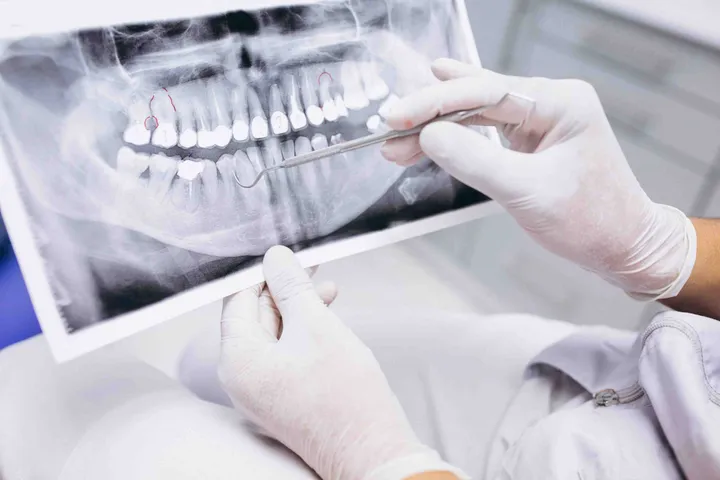
We take a panoramic X-ray to see the bone, the nerves and the sinuses before deciding where each implant goes. If there is not enough bone, a graft may be needed first, and we will tell you if that is the case.
The process, step by step
- Consultation and diagnosis. We examine your mouth, review your X-rays and explain your options, the timeline and the cost.
- Preparation. Some cases need extractions, treatment of gum disease or a bone graft before the implant.
- Implant placement. The implant is placed under local anesthesia. If the gap shows when you smile, ask us about a temporary tooth for the healing period.
- Healing. Over the next few months the implant fuses with the bone.
- Final teeth. We attach the abutment and deliver your crown, bridge or full-arch prosthesis, adjusting the bite so it feels natural.
After your treatment
Brush and floss around your implants as you would with natural teeth, and keep your regular cleanings. Implants do not get cavities, but the gums around them can get infected if plaque builds up. With good care, implants can last for many years.
Planning your visit from the U.S.
Most of our implant patients cross from San Diego for the day. Tell us on WhatsApp how many teeth you are missing and, if you have them, send recent X-rays. We can then tell you how many visits your case is likely to need, so you can plan your trips.